


Gorham Silver Marks: Reading the Lion, Anchor, and Date Symbol
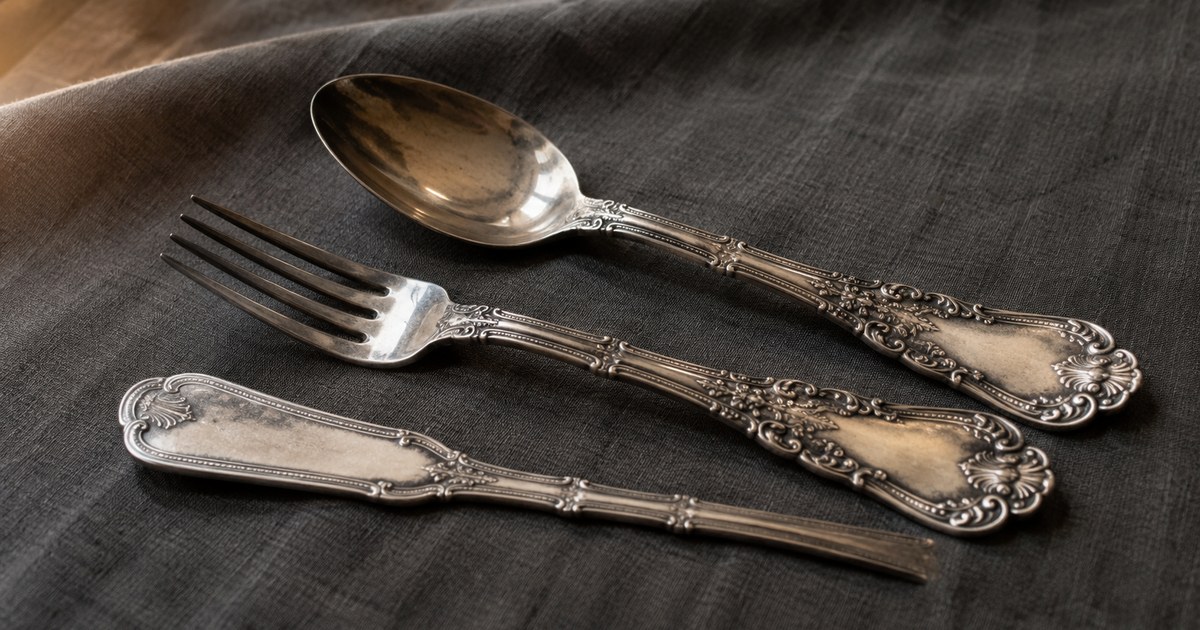
Most guides to Gorham silver marks hand you a chart of year symbols and stop there. That works for one situation: a piece made between 1868 and 1933 that actually carries a legible year symbol. It fails for everything else, which in practice is most of the Gorham silver people actually own. Pieces made before 1868 carry no date symbol at all, and neither does effectively anything after 1933. Between those years the symbol is applied unevenly, and references disagree about how consistently it reached flatware as opposed to hollowware, so a missing symbol is common and is not evidence of a problem. If you are holding a piece with a lion, an anchor, a G, a word, and three numbers, the chart alone will not tell you which of those is the date.
Gorham silver marks are read as a set of separate stamps, not one hallmark. The lion, anchor, and G is the trademark. A single letter or pictorial symbol beside it is the year of manufacture, used systematically from 1868 through 1933. Numbers are usually pattern or model numbers, not dates, and a lone letter is a flatware weight code.
Quick identification checklist
- Find the lion, anchor, and G group. That is the maker trademark and it confirms Gorham, not a date.
- Look for a single symbol or letter set apart from the trademark. Between 1868 and 1933 this is the year mark.
- Read the word marks. STERLING means the sterling standard. EP, Electroplate, or Gorham Electro Plate means plated base metal, a separate line that is documented under its own conventions.
- Treat every number as a pattern or model number until proven otherwise. Gorham numbered patterns and hollowware forms extensively, and these are the marks most often misread as dates.
- Check for a lone weight letter on flatware. E, H, M, R, and T are weight codes, not years.
- Note the company name if one is spelled out. Partnership names bracket date ranges on their own.
- Accept a blank result gracefully. No date symbol is a common, legitimate outcome and it still narrows the field.
The four different things stamped on a Gorham piece
This is where most owners go wrong, and no ranking page separates them cleanly. A Gorham piece can carry four independent kinds of stamp, and they answer four different questions.
The trademark answers “who made it.” The lion passant, an anchor, and a Gothic G, usually in a row, is the mark Gorham used from about 1853 and formally registered with the US Patent Office in 1899. Two early lion forms are worth knowing: a lion facing left, used roughly 1848 to 1865, and a lion facing right, used from about 1853.
The date symbol answers “when was the blank made.” From 1868 Gorham used capital letters A through Q for the years 1868 to 1884, then switched to a unique pictorial symbol for each year through 1933. It sits apart from the trademark and is a single character or device, never a string.
The pattern number or name answers “which design is this.” It is usually a multi-digit number, sometimes with a name spelled out. It has no date content whatsoever, and it is the single most common thing people mistake for a year.
The flatware weight code answers “how heavy is this grade.” Single letters E for extra, H for heavy, M for massive, R for regular, and T for trade were used after 1898 and discontinued during the 1940s. A lone H next to a pattern number is a weight, not a year.
Sort your marks into those four buckets before you try to date anything. Half of all Gorham dating errors are resolved at that step.
Reading the date symbol system
Between 1868 and 1933 the system is genuinely good, which is why it gets all the attention. Gorham adopted the sterling standard in 1868 and began systematic date marking in the same move, so the two changes arrived together.
The letter era, 1868 through 1884, uses capitals A through Q in sequence. After that each year gets its own distinct pictorial device, and those symbols run through 1933. They are small and often shallow, so a worn or over-polished piece may have a symbol that is present but effectively unreadable. A published symbol chart is the reference tool here, and matching a worn device by eye is genuinely difficult.
Two limits on what the symbol tells you. First, it dates manufacture of the blank, not the finished object as sold. A piece could be blanked in one year and decorated, monogrammed, or retailed later. Later monogramming in particular tells you nothing about the date mark. Second, a pattern reissued years after its introduction still carries the date symbol of the year the blank was actually made, so an early pattern name with a later symbol is normal rather than suspicious.
Some references describe a further dating convention used on pieces after 1940, based on a year enclosed in a polygon. Accounts of it vary, so treat any date you reach that way as provisional and check it against a specialist Gorham reference before relying on it.
When there is no date symbol at all
This is the case owners face most often and the one the charts abandon. A missing date symbol is not a red flag on its own. Several large categories were never date marked.
Anything before 1868. Systematic date marking started with the sterling adoption. Earlier work, including coin-silver-era pieces, was not year marked. Here the company name is your dating handle. Gorham and Webster ran from 1831 to 1837, Gorham Webster and Price from 1837 to 1841, J. Gorham and Son from 1841 to 1850, and the firm became the Gorham Manufacturing Company in 1865. A spelled-out partnership name brackets a piece to a few years without any symbol involved.
Silverplate lines. Gorham date-marked plated wares as well as sterling, but the plate lines carried their own marking conventions and references treat them separately. Confirm STERLING or EP first, then read the piece against a reference that covers that line specifically rather than assuming one chart serves both.
Pieces marked with a form number instead. Plenty of Gorham was marked with a form or model number and the trademark rather than a year symbol. The number identifies the form in Gorham’s catalog, which a specialist reference can often date, but the piece itself carries no year.
Effectively everything after 1933. The systematic year symbol does not continue past that point in a form the general references can read, so a mid-century Gorham piece is dated by pattern introduction, mark style, and word marks rather than by a symbol.
In all of these cases you are back to evidence stacking: trademark form, word marks, pattern, style, and construction together, no single decisive mark.
STERLING versus plate, and what “Gorham” on a piece really claims
STERLING indicates the sterling standard, 92.5 percent silver. EP, Electroplate, or Gorham Electro Plate indicates a plated base metal, an entirely different product with its own marking conventions and its own market position. This is the first sort to make, because everything downstream depends on it, and because plate pieces are routinely offered as sterling by sellers who did not check.
One more distinction worth holding. The Gorham name on a piece does not always mean Gorham manufacture. Gorham both made and retailed silver, and it also acquired and operated other silver firms over time. A retailer mark, a subsidiary mark, or a name applied at sale is not the same claim as a Gorham trademark plus a Gorham date symbol on the piece itself. When only the name appears with none of the trademark elements, treat attribution as open.
Watch-outs and common mistakes
- Reading the pattern number as a year. The most common single error. Multi-digit numbers on Gorham are pattern and form numbers.
- Reading the weight letter as a date letter. E, H, M, R, and T on flatware are weight grades. A date letter from the 1868 to 1884 era is A through Q and appears in the date position, not beside the pattern number.
- Using a sterling reference on a plate piece. The plate lines are documented separately and their marks are read differently. Check for STERLING or EP first.
- Assuming no symbol means fake. Whole legitimate categories were never date marked.
- Dating from the monogram. Engraving was frequently added after purchase and sometimes much later. It does not date the piece.
- Over-polishing before reading. Aggressive polishing wears shallow date symbols away permanently, and with them the best dating evidence the piece has.
- Treating a matched date symbol as proof of authenticity. A symbol that matches a chart is one piece of supporting evidence. Weight, construction, mark placement, and mark crispness all have to agree too.
Photo tips
- Shoot the mark group flat-on and fill the frame. Get the whole row of stamps in one image so their spacing and relative sizes are visible.
- Use raking light from the side. Angled light throws shadows into shallow stamps and makes worn symbols readable when flat light will not.
- Avoid direct flash on polished silver. It blows out exactly the surface you need. Diffused daylight near a window works better than any on-camera light.
- Photograph the date symbol separately at maximum sharpness. It is the smallest and most detailed mark on the piece.
- Include a scale reference such as a ruler edge in one frame, so the size of the marks is unambiguous.
- Shoot the whole piece too. Form and proportion help confirm whether the mark is plausible for the object it sits on.
Common questions
How do I date Gorham silver with no date symbol?
Use the other marks. A spelled-out partnership name brackets pre-1865 pieces to a few years. STERLING versus EP separates sterling from the plate lines, which are documented separately. Pattern and form numbers can be dated against specialist catalogs. For post-1933 pieces, pattern introduction dates and mark style are the standard handles instead of a year symbol.
What does the lion, anchor, and G mark mean on Gorham silver?
It is the Gorham maker trademark, in use from about 1853 and registered with the US Patent Office in 1899. It confirms the maker and nothing about the year. The lion form is a small extra clue: facing left is associated with roughly 1848 to 1865, facing right from about 1853 onward.
Is Gorham silver always sterling?
No. Gorham produced substantial silverplate lines alongside its sterling, marked EP, Electroplate, or Gorham Electro Plate rather than STERLING. The plate lines were date-marked too, but they are documented under their own conventions. Confirm which line you have before consulting any date chart, because reading a plate mark against a sterling chart invites a confidently wrong answer.
Related guides
- Sterling Silver Hallmarks: What the Marks Mean
- Silver Makers Marks Identification: How to Read Maker Stamps
- Silver Plate vs Sterling Silver: How to Tell the Difference
- 1847 Rogers Bros Silverware: Marks and Dating
When to use the Antique Identifier app
Photograph the full mark group in raking light, then the date symbol on its own, then the whole piece. The app reads the stamp cluster and helps separate the four mark types that owners routinely conflate: trademark, date symbol, pattern number, and weight code. That sorting step is where most Gorham dating goes wrong, and getting it right often changes the answer entirely. Treat the result as evidence to stack with the word marks, the form, and the construction rather than as a verdict, and take any high-value piece to a specialist before you insure or sell it.
Topics