


How to Identify Bakelite: Simple Tests That Work
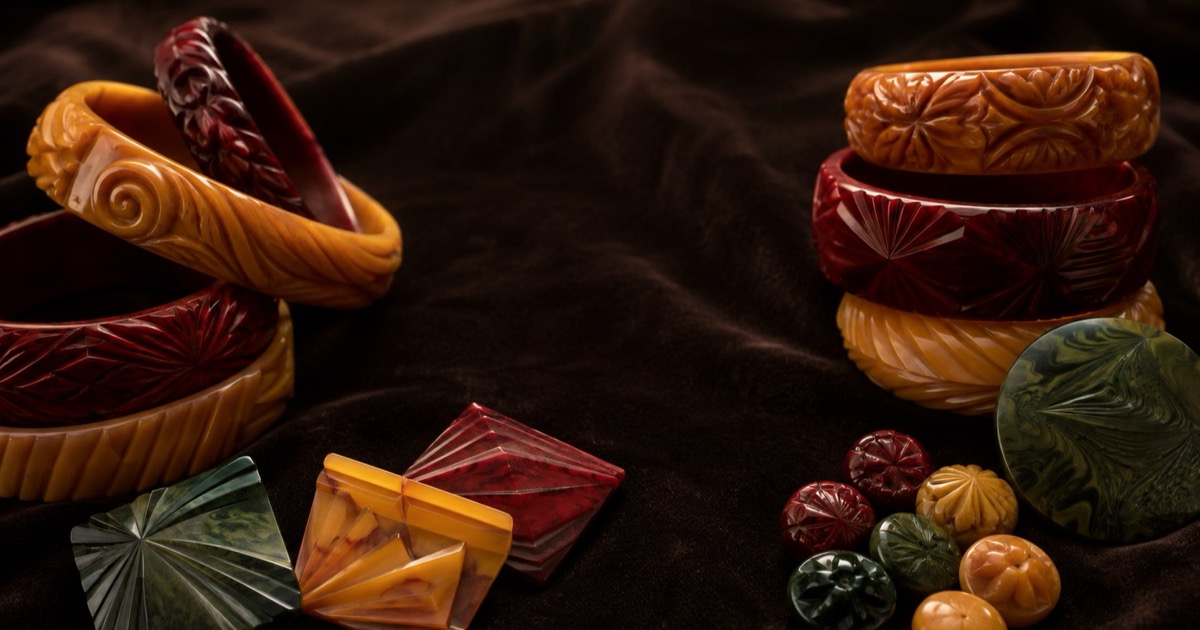
Knowing how to identify Bakelite separates a $5 thrift-store bracelet from a $200 one, which is why the topic comes up constantly among vintage jewelry collectors. Several reliable at-home tests exist, none requiring special equipment. The internet is also full of methods that damage pieces or simply do not work.
To identify Bakelite, a dense phenol-formaldehyde plastic common in vintage jewelry, run the piece under very hot tap water and smell it immediately — genuine Bakelite gives off a sharp, carbolic, formaldehyde-like odor. A yellow stain on a Simichrome or Formula 409 swab confirms phenolic resin. Start with the sniff test, since it is completely non-destructive.
This guide covers each practical test in order of least invasive to most, explains what you are detecting, and covers the related plastics — celluloid, Lucite, and galalith — most often confused with Bakelite.
Quick identification checklist
- Run a hot-water sniff test first: briefly run the piece under very hot tap water, then smell it immediately — genuine Bakelite gives off a distinctive sharp, slightly chemical smell often described as carbolic or formaldehyde-adjacent.
- Rub a small hidden area vigorously with your thumb for several seconds, then smell your thumb — friction heats the surface and produces the same phenolic odor.
- Apply a tiny amount of Simichrome polish or Formula 409 cleaner on a cotton swab and rub a hidden spot; a yellow stain on the swab indicates phenolic resin (Bakelite or close relatives).
- Listen to the sound: tapping two pieces of genuine Bakelite together produces a deep, wooden “clack” distinctly different from the lighter “click” of acrylic or the higher-pitched sound of celluloid.
- Check the weight: Bakelite is noticeably denser and heavier than Lucite or celluloid of similar size.
- Look for carved decoration executed without mold seams — carved Bakelite bangles and brooches are cut after molding, so the carved grooves are clean and seamless.
The safe at-home tests explained
Hot-water sniff test
Hold the piece under the hottest water your tap produces for 20–30 seconds, then immediately bring it to your nose. Bakelite — a phenol-formaldehyde resin — releases a faint but unmistakable sharp, slightly acrid smell collectors describe as carbolic soap or a chemistry lab. The smell fades quickly, so check within a few seconds of removing the piece from the water. Heavily polished surfaces can suppress the odor; try again with hotter water if the first pass registers nothing.
Friction rub test
Press your thumb firmly on a hidden area and rub quickly back and forth for five to ten seconds. The friction generates enough heat to release the same phenolic odor without any water. This is useful for a quick field check at a flea market and works best as confirmation after a positive hot-water result, since the odor is fainter.
Simichrome and 409 swab test
Apply a small amount of Simichrome metal polish or Formula 409 cleaner to a cotton swab and rub a spot on the back of the piece. A distinct yellow or yellow-orange stain on the swab indicates phenolic resin. This test is not perfectly specific to Bakelite — some other phenolic plastics also produce a yellow result — so treat it as corroborating evidence alongside the sniff test, not proof on its own.
Sound and weight
Tapping two Bakelite pieces together produces a resonant, dense “clack” that experienced collectors recognize immediately — distinctly lower and woodier than the lighter “click” of Lucite or acrylic. Bakelite also sits noticeably heavy in the hand; a large Lucite bangle of similar size feels almost hollow by comparison.
Tests to avoid
The hot-pin test — pressing a heated needle into the plastic — is widely cited on older websites and should be avoided. It permanently damages the surface and is no more reliable than a careful sniff test; multiple plastics release similar odors under direct heat. The hot-water and friction tests give the same information without any damage.
Bakelite vs celluloid vs Lucite vs galalith
These four materials are the most common look-alikes you will encounter in vintage jewelry and small objects.
Celluloid is older than Bakelite, widely used from the 1870s through the 1930s in jewelry and hair combs. It is lighter, slightly more translucent, and smells of camphor rather than phenolic resin under heat. Celluloid is highly flammable and can deteriorate into a vinegary-smelling crumble over time. The swab test may produce a faint yellow result, but less vivid than on Bakelite.
Lucite and acrylic are lighter, produce no phenolic odor, and leave no yellow residue on a swab. Lucite is crystal clear or brightly transparent; the sound test is reliable — it clicks rather than clacks. Much of what is sold as “Bakelite” at thrift stores is actually Lucite.
Galalith is a milk-protein plastic used mainly in early European jewelry, much rarer in the US market. It leaves no yellow on a swab and smells faintly of burnt protein under heat.
Fakelite and modern marbled phenolic
“Fakelite” is the collector term for newly made jewelry that mimics vintage Bakelite — marbled, swirled, or laminated pieces sold at markets as vintage. Modern marbled phenolic resins can pass both the sniff test and the swab test because they are, in fact, phenolic resin. Age and wear evidence are your defense here: authentic vintage pieces show subtle scratches, oxidation in crevices, and a genuine patina. Newly made pieces lack this wear and often show machine-perfect carving lines where period pieces show handwork variation.
Construction cues
On carved Bakelite bangles and brooches, the carving was done after molding. A carved bangle therefore has no mold seam running through the carved design; the grooves are clean cuts into the surface. Injection-molded plastic pieces may show a faint seam at the midline.
Metal findings on vintage Bakelite were typically pressed into pre-drilled holes or set in cast mounts, not glued. Check the reverse of brooches: C-clasps (a simple curved wire) are associated with pre-1940 work; roll-over box clasps appeared later. These finding styles provide corroborating date evidence rather than proof of material. Bakelite was widely used for buttons, buckles, kitchenware handles, and radio housings — the same tests apply to all of these forms.
Watch-outs and common mistakes
- Confusing Lucite with Bakelite based on color alone — opaque, deeply pigmented colors appear in both materials; the tests are necessary.
- Treating a single positive swab result as conclusive without confirming with the sniff test — some dyes and surface treatments can produce faint yellow on a swab.
- Dismissing a piece as non-Bakelite because the smell is faint — very well-polished or coated surfaces suppress the odor; try friction in addition to hot water.
- Buying “tested Bakelite” from a vendor without being able to test it yourself — the tests are simple enough that you should always do your own.
- Assuming all colored marbled plastic is vintage — modern phenolic marbling is commercially available and widely used for new production pieces sold at antique markets.
Photo tips that improve identification
- Photograph carved decoration at a low angle with raking light to reveal tool paths, carving depth, and the absence of mold seams.
- Capture the clasp or finding hardware on the reverse of brooches — the mechanism style and metal type are dating evidence.
- For bangles, photograph the interior surface where wear patterns concentrate; genuine vintage pieces show authentic wear there.
- In strong side-light, surface texture becomes visible — Bakelite in good condition shows fine use scratches, not the unmarked clarity of new production.
Common questions
Does the Formula 409 test always work on Bakelite?
A yellow or yellow-orange stain on the swab is a strong sign of phenolic resin, but the test is not perfect in either direction. Some other phenolic plastics also turn the swab yellow, some dyes produce a faint false positive, and heavily polished or coated surfaces can suppress the reaction. Always pair the swab result with the hot-water sniff test before concluding anything.
How can you tell Bakelite from Lucite?
Lucite is much lighter, produces no phenolic odor under hot water or friction, and leaves no yellow residue on a Simichrome or 409 swab. The sound test is also reliable: two Bakelite pieces tapped together give a deep, wooden clack, while Lucite gives a lighter click. Much of what is sold as Bakelite at thrift stores is actually Lucite, so test rather than trust the label.
Is the hot-pin test safe for identifying Bakelite?
No. Pressing a heated needle into the plastic permanently scars the surface, and it is no more reliable than a careful sniff test because several plastics release similar odors under direct heat. The hot-water and friction tests give the same information without any damage, so there is no reason to use a pin on a piece you care about.
Related guides
- Costume Jewelry Marks Identification: Trifari, Coro, and More
- How to Identify Antique Jewelry Markings
- Antique Button Identification Guide
When to use the Antique Identifier app
Photograph the whole piece in good light plus close-ups of any maker’s marks, clasp hardware, and carved detail. The app can help narrow plastic type by visual profile and cross-reference findings against known vintage jewelry makers. Treat a strong result as a starting point for deeper research when the piece might be valuable.
Topics